
Colorado wind is stronger than we might think, and it can appear out of nowhere, so having the proper fencing to withstand strong wind can save you from an unwanted expense later. When it comes to finding the best privacy fence for high winds, there are many factors to consider. For instance, the right fence choice depends on your property’s specific needs, soil conditions, and aesthetic requirements, as well as having the proper team to install it. Here is what you need to know before you commit to a system.
Why High Winds Are a Real Threat to Colorado Fences
The Denver metro area is located on the edge of the Great Plains, so wind is always a factor when choosing fencing. Winds that descend through mountain passes can speed up significantly, especially along the I-70 and I-25 corridors, making these areas more exposed. Without having the best privacy fence for high winds, standard residential fences can act like sails, causing the boards to warp, posts to lean, and sections of the fence to break or blow down entirely.
Beyond the immediate damage caused by wind, there are more problems that develop over time. A leaning post puts side pressure on all the connected panels. This pressure can loosen hardware, crack boards, and even cause the post to come out of the ground. In Colorado, the clay-rich soil tends to absorb and release moisture unevenly across seasons. As a result, a fence post that shifts during a wet spring could become permanently damaged by the next winter. When choosing fences for areas prone to high winds, it’s important to consider durability from the start. This is a long-term financial decision, not just about appearance.
What Makes the Best Privacy Fence for High Winds?
Not all fence systems handle wind the same way. Three engineering factors separate a fence that holds from one that fails.
1. Post Depth and Footing
Post depth is the most important factor in wind resistance. If a post isn’t buried deep enough, it will pivot at its base when wind pushes against it. In Colorado, where soil conditions vary, we recommend burying at least one-third of the post’s total length. Typically, concrete footings are poured below the frost line, which is usually about 36 inches deep in the Denver area. This helps prevent the fence from lifting in the wind and protects against frost heave, which can loosen shallow posts over time. Skipping this step to save time or money is a common reason fences fail too soon.
2. Material Strength and Flexibility
Different materials react differently to wind. Rigid materials that can’t bend may crack under strong wind, while materials without structural strength might simply bend out of shape. The best privacy fence for high winds uses materials strong enough to resist bending and safely transfer the force to the post and footing. Cedar, if properly dried and graded, performs well when supported by a sturdy post system. Aluminum profiles are designed to bend slightly without permanently losing their shape. Chain link fencing distributes wind force across the entire mesh rather than concentrating it at the joints.
3. Board Spacing and Wind Load Design
A solid privacy fence provides the highest wind resistance because it fully blocks airflow. But in areas with strong winds, this can be a problem. Fences with controlled spacing, such as shadowbox designs or spaced pickets, allow some wind to pass through, reducing the wind load on the fence. For properties that require complete privacy, the structural design must be adjusted by using deeper posts, narrower post spacing, or stronger post materials. Knowing your privacy needs is important before choosing a fence design.
3 Best Fences for High Winds in Colorado
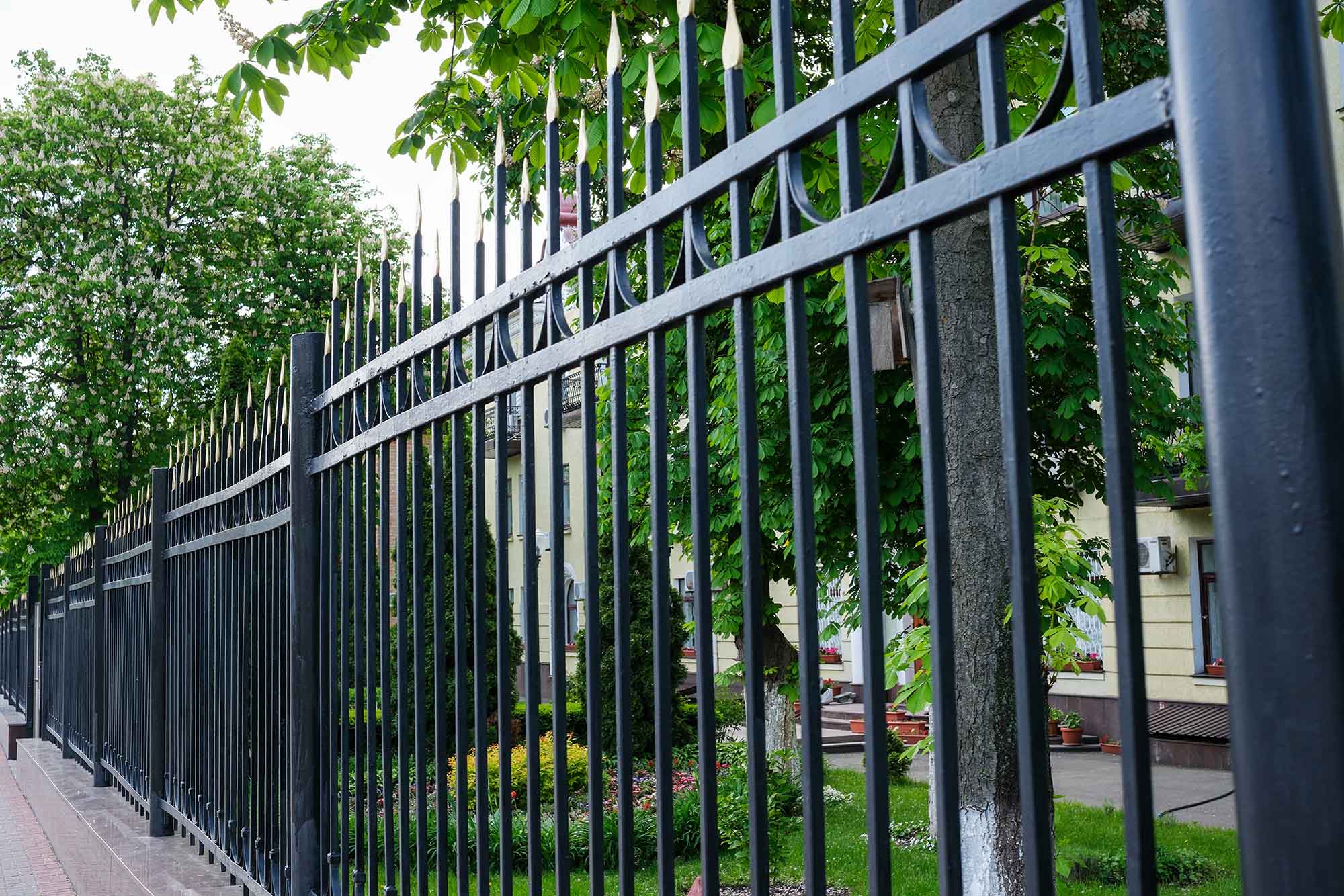
After 20 years of installations across the Denver metro, these are the three systems that consistently perform in Colorado’s wind environment.
1. Cedar Wood with Metal Post Reinforcements
Cedar is Colorado’s most popular privacy fence material for good reason. It is naturally resistant to moisture and insects, holds fasteners well, and weathers to a clean, neutral tone that works on everything from residential backyards to commercial perimeters. The challenge is the post. Traditional wood posts buried in Colorado’s clay soils are susceptible to rot and heave, which is why our crews install a cedar fence with steel or galvanized post reinforcements rather than relying on wood posts alone. The metal foundation anchors the system against lateral wind forces while the cedar boards above handle the aesthetic and privacy requirements. This hybrid approach delivers the warmth and character of a wood fence without the structural vulnerabilities that make traditional cedar installations fail in high-wind corridors.
2. Ornamental Aluminum
Powder-coated aluminum is strong in wind because it evenly distributes load across its rails and pickets. Unlike solid wood panels that catch wind uniformly, the open design of aluminum fences allows air to pass through, while the interconnected rails transfer any force to the posts. This makes it ideal for commercial campuses and HOA communities where looks and durability matter. The material resists rust, needs no painting, and withstands Colorado’s freeze-thaw cycles without cracking or peeling. For property managers wanting a maintenance-free fence that lasts in the Front Range climate, ornamental aluminum is a reliable long-term choice.
3. Heavy-Duty Chain Link
For large commercial perimeters, utility corridors, and athletic fields, heavy-duty chain link remains one of the most wind-resistant fencing systems available. The mesh does not fight the wind; it yields to it, distributing load across thousands of interlocked wire points rather than forcing the structure to absorb the full impact at rigid connection points. Black-coated chain link performs the same function as galvanized steel but with a more polished appearance that works well in commercial and institutional settings. With posts properly set in concrete footings and tension bands correctly tensioned, a chain link system can outlast most privacy fence alternatives in sustained high-wind environments.
Is Wood Fencing a Good Option for High Winds?
The best wood fence for high winds is one designed specifically for such conditions, not a standard residential fence meant for calm suburbs. Wind damage often happens due to poor post installation, small post sizes, or low-quality wood that warps or splits. Choosing top-quality cedar, setting posts in deep concrete, and adding metal sleeves or full metal replacements make wood fencing a good, attractive option even in windy, exposed areas.
That said, wood does require more maintenance than aluminum or chain link. Colorado’s UV exposure accelerates weathering, and boards that are not sealed or stained regularly will gray out faster and become more susceptible to cracking. For property owners committed to a natural aesthetic, cedar with a proper maintenance plan is an excellent choice. For those who prefer a set-it-and-forget-it approach, aluminum or chain link will require less maintenance over the fence’s lifespan.
Get a Wind-Ready Privacy Fence Built for Colorado
Selecting the best privacy fence for high winds in Colorado is not a guessing game. It comes down to post depth, material selection, and installation precision, three areas where the difference between a subcontracted crew and an experienced in-house team becomes very clear. At Marquez Fencing, our crews have spent over 20 years working in Denver’s soil conditions and weather patterns. We own the entire process, from the first site assessment to the final cleanup, with no third-party labor involved at any stage.
Whether you are managing a commercial property that needs a secure, wind-rated perimeter or a residential lot that has already lost one fence to a Front Range gust, we can identify the right system for your specific conditions. Contact us for a site-specific assessment and a free estimate.