
Most homeowners choose white vinyl for its clean, classic look, but that same bright white surface is exactly where dirt, dust, and green mold show up first. Colorado experiences every season: wind, hail, snow, and high UV exposure. Regular vinyl fence maintenance keeps panels looking crisp with a soft brush, a mild detergent solution, and a rinse. Catching mold and grime early means a quick cleaning job instead of a costly repair later. Here’s how to safely clean a vinyl fence, including what sets Denver’s climate apart from the rest of the country and when it might be time to replace it.
Why Denver’s Climate Makes Vinyl Fence Maintenance Necessary
Vinyl fencing is one of the lowest-maintenance materials on the market, and a little regular care keeps it that way. In Denver, strong sunlight can cause the fence to wear over time, especially in shaded yards or on north-facing sides that stay damp longer after snow melts. That combination of strong UV exposure and pockets of trapped moisture creates ideal conditions for algae, mildew, and the green mold streaking that shows up along fence bases and shaded panels. A basic vinyl fence maintenance routine keeps the material looking new and prevents buildup from becoming a bigger problem later.
What You’ll Need Before You Start
Cleaning a vinyl fence doesn’t need special products. A simple list of supplies is enough for the job:
- Soft-bristle brush or non-abrasive sponge
- Garden hose with a spray nozzle
- Mild dish soap or white vinegar
- Bucket
- Microfiber cloth
- Work gloves
Skip anything abrasive. Steel wool, scouring pads, and strong solvents can scratch or discolor vinyl panels, which turns a simple cleaning job into a permanent cosmetic issue.
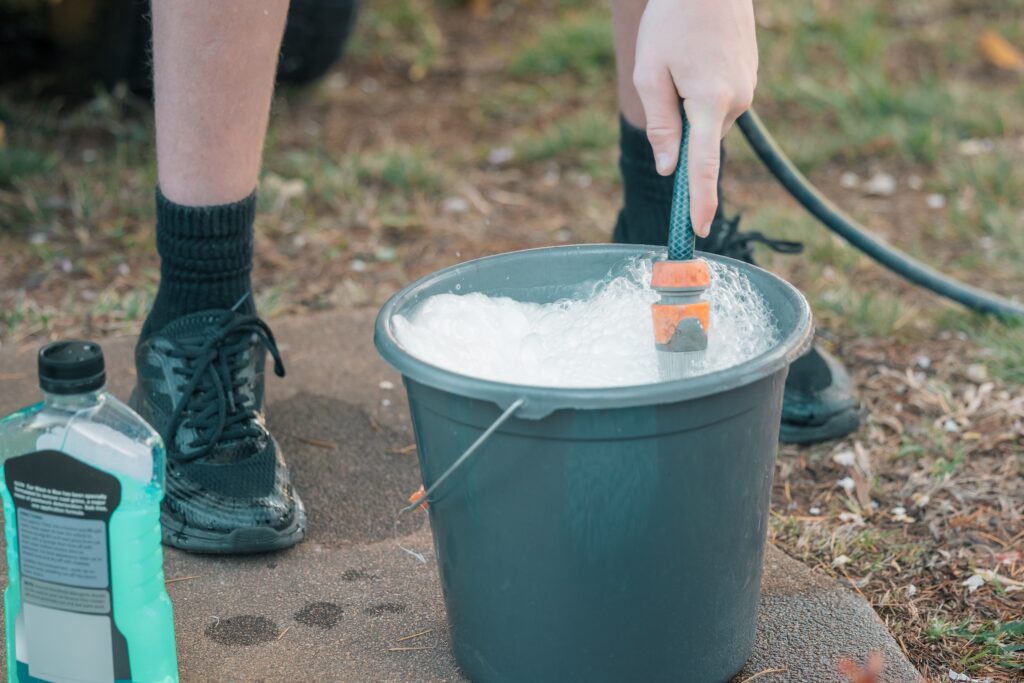
How to Clean Green Mold, Mildew, and Algae Off Vinyl Fencing
This process works for most vinyl panels, regardless of color, and each step builds on the last. Skipping the rinse or scrubbing too aggressively usually leads to streaking or surface damage.
1. Rinse
Start by hosing down the entire length of the fence to knock loose dirt, pollen, and dust. This step alone often removes light grime and makes the next steps more effective.
2. Apply Cleaner
Mix a few drops of dish soap into a bucket of warm water, or combine equal parts water and white vinegar for tougher mold and algae spots. Apply the solution with a sponge or soft brush and let it sit for a few minutes to loosen buildup. The EPA’s guidance on home mold cleanup recommends scrubbing mold off hard surfaces with detergent and water rather than using bleach as a routine step, which aligns with what works well on vinyl without risking damage to the finish.
3. Scrub and Rinse
Work the brush over mold and mildew spots in small circles, then rinse thoroughly with the hose. Rinsing well is important here, since leftover soap residue can attract more dirt over time.
4. Dry and Inspect
Let the fence air dry, then walk the line and check for cracks, discoloration, or loose panels while you’re already out there. A quick visual inspection during cleaning is the easiest way to catch small issues before they turn into repairs.
Denver-Specific Maintenance Tips
Here are some tips for Denver property owners to incorporate into their regular routine:
- Sprinkler overspray leaves behind hard water spots and mineral deposits on panels near irrigation lines. A vinegar-and-water solution cuts through these mineral stains better than soap alone.
- Post-hailstorm checks are worth doing after any significant Front Range hailstorm, since impact marks on vinyl panels are not always obvious until you look closely.
- Spring cleaning timing matters in Colorado. Cleaning once the snow has fully melted and de-icing salt runoff has rinsed away gives a more accurate picture of what needs attention before the growing season sets in.
How Often Should You Clean and Inspect Your Fence?
A light rinse every few months prevents dust and pollen buildup. Plan a full deep clean with a soap or vinegar solution twice a year, once in spring and once in fall, and add an extra inspection after any major hailstorm or windstorm. Shaded sections and areas near sprinklers may need attention more often than those that get full sun.
Signs You Need a Repair or Replacement
A good cleaning brings most vinyl fences back to looking new, and when it doesn’t, that’s usually your fence telling you something. Here’s what to check for.
Cracks or Warping in Panels
Vinyl is durable, but repeated freeze-thaw cycles and temperature swings can eventually cause panels to crack or warp. A single cracked panel is usually a simple swap, but widespread cracking across multiple sections points to a bigger issue with the material’s age.
Loose or Leaning Posts
Strong Colorado wind pushes against a solid privacy fence year after year, and that steady pressure gradually works posts loose at the base. Once a post leans noticeably out of plumb, the section has usually moved past a quick fix and into repair or complete replacement territory.
Discoloration That Won’t Clean Off
Yellowing or gray staining that persists after a full cleaning is usually a sign the UV exposure has worn into the vinyl itself, past the surface layer. At that point, the panel has reached the end of its lifespan and cleaning will not bring the color back.
For Repairs or Replacement, Trust Marquez Fencing
Routine vinyl fence maintenance keeps a fence looking sharp and works best as ongoing care for a fence that’s still structurally sound. Cracked panels, leaning posts, and UV damage that won’t clean off are signs the fence has moved past what a scrub brush can fix, and that’s usually where our team comes in. Our vinyl fencing installation work is backed by 20 years of in-house experience in Denver’s climate, and because we never subcontract, the crew that shows up handles every step of the job.
If your fence needs more than a cleaning, contact us for a free estimate.