
A sturdy fence is a beautiful sight, but when posts shift and your fence starts leaning, panic alarms can start ringing. Will the fence collapse? Can it be easily repaired? Will you have to have the structure completely replaced? These are all valid questions, and ones that any owner of a leaning fence should ask themselves. The answers depend on how severely the fence is leaning, what type of fence it is, environmental factors, and several other scenario-specific details. Dealing with a fence leaning out of nowhere usually means looking at what is happening underground before the next big Colorado windstorm strikes.
What Causes Widespread Fence Leaning?
Across the Denver metro corridor, severe weather patterns regularly test the structural boundaries of residential yards. Saturated clay soils from heavy spring snowmelt expand underground, loosening the grip around traditional concrete footings. Consequently, vertical columns begin to drift away from their original straight lines. Wind forces rolling off the Front Range catch wood privacy panels like a massive sail, adding relentless lateral pressure. Without proper intervention, a minor shift eventually cascades down the entire perimeter line, leaving the whole structure looking like that tower in Pisa.
How to Tell if You Need a Repair or a Full Replacement
Figuring out whether to patch up a few panels or tear down the whole line comes down to a few clear warning signs. By following a basic on-site evaluation, property owners can accurately grade the damage.
| Evaluation Metric | Candidate for Simple Repair | Requires Full Replacement |
|---|---|---|
| Wood Integrity (Screwdriver Test) | Tool meets firm resistance; wood fibers are solid at the ground level. | Tool sinks easily into the timber; fungal rot has destroyed the post core. |
| Scale of Damage (The 25% Rule) | Less than a quarter of the total boundary line shows shifting or wear. | More than 25 percent of the perimeter line is structurally compromised. |
| Components & Gates | A few loose pickets or minor hardware adjustments are needed. | Heavy oxidation on hardware; sagging gate frames pulled completely out of alignment. |
| Lifespan Benchmarks | Structure is well within its early operational age window. | Materials are near or past historical limits (10 to 20 years for standard wood). |
| Financial Continuity | A one-time maintenance expense fixes an isolated issue. | Consecutive annual patching costs compound rapidly past a long-term investment. |
1. The Screwdriver Probe Test
Fungal rot can destroy wood from the inside out before any damage shows on the surface. To check for this hidden decay, push a regular screwdriver firmly into the base of a post right where it meets the dirt. If the metal tool sinks into the timber without much effort, the wood fibers have rotted completely. Bracing a post with soft wood like this is an inefficient choice because the foundational core has vanished.
2. The 25% Rule for Total Failure
Evaluating the entire length of the boundary line gives you a clear baseline for your next step. According to industry standards, when more than a quarter of the structure is structurally compromised, patching up individual spots loses its value. Widespread shifting usually points to a systemic failure along the whole line. As a result, starting fresh with a new build becomes the most practical choice.
3. Missing Pickets and Sagging Gates
Hardware components reveal a lot about the health of the broader framing system. While a few loose pickets are easy to swap out, heavy oxidation and pitting in metal components suggest deep material breakdown. Shifting ground forces can also pull gate frames out of alignment, causing latches to miss their targets completely. When multiple panels show these symptoms at the same time, the underlying skeleton has reached its limit.
4. Historical Material Lifespan Benchmarks
Every type of material comes with a natural operational expiration date. Under normal conditions, standard wood fences usually give you 10 to 20 years of solid use before environmental wear takes over. Conversely, high-quality vinyl or galvanized steel can stand straight for 20 to 30 years. Facing a tilt near the end of these age windows means the primary components have simply worn out, making partial fixes highly unreliable.
5. The Financial Trap of Constant Repairs
Spending money on consecutive minor fixes often creates an expensive loop. Homeowners frequently buy temporary metal splints or add extra concrete support packages every spring, hoping to stretch a few more months out of a failing line. Over two or three seasons, these continuous maintenance bills compound rapidly. This spending pattern easily climbs past the cost of a modern, long-term installation, making a full replacement the smarter financial move.
How to Fix a Leaning Fence with Long-Term Solutions
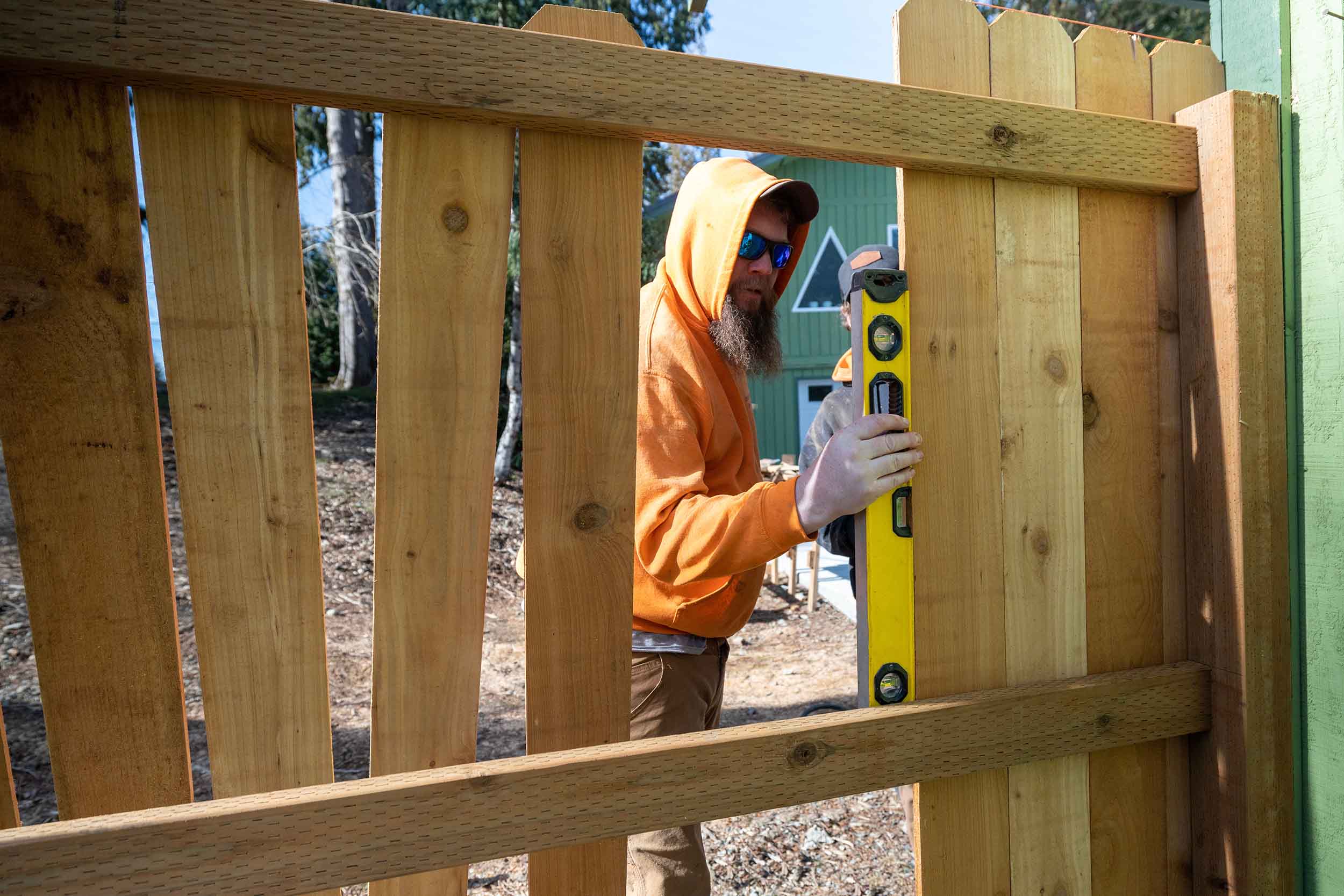
Correcting a structural lean permanently requires addressing the underground foundation and rebuilding with weather-proven materials. A systematic approach restores vertical alignment and protects your property line for decades. Here are 4 steps for how to fix a leaning fence:
Step 1: Clearing the Damaged Structure
Fixing a widespread lean begins with removing the compromised materials. Attempting to winch or pull heavy, rotted wood back into alignment often fractures the subterranean timber. A complete tear-out clears away the failing posts and handles the heavy haul-away, setting a clean baseline for a straight installation.
Step 2: Anchoring with Galvanized Steel Posts
The most effective solution for stabilizing a perimeter involves upgrading the foundational posts. Utilizing galvanized steel post foundations completely eliminates the risk of underground wood rot. This steel anchor investment provides exceptional stability against heavy Front Range wind loads, keeping the structural line perfectly straight for decades.
Step 3: Adapting to Slopes with Rackable Systems
Fixing a tilt on hillsides requires adjusting for uneven ground pressure. Utilizing specialized rackable ornamental systems allows the pickets to follow the continuous contour of the earth naturally. This continuous alignment keeps the weight balanced across the entire property line, preventing gravity from pulling the panels out of alignment over time.
Step 4: Practicing High-Efficiency Installation
The final assembly requires experienced execution to secure long-term stability. Our in-house crews function as a well-oiled machine, bringing 20 years of local expertise to the property line. Because we never subcontract, our permanent team handles every step with total accountability, executing a complete tear-out and precision rebuild within a tight two-day window.
Protecting Your Boundary Against Fence Leaning
Ignoring a clear case of fence leaning invites catastrophic failure during the next major Colorado storm. By applying the 25% evaluation rule, property owners can easily draw a clear line between basic maintenance and complete replacement needs. Upgrading to steel anchors and rackable panel designs provides a definitive answer for how to fix a leaning fence without relying on recurring temporary patches.
Because our dedicated, in-house labor model guarantees total accountability, the final build matches your neighborhood code exactly. Ultimately, taking a permanent approach to a fence-leaning issue protects your yard, privacy, and property value for the long haul. Request an estimate today.