
Commercial perimeter fencing in Colorado requires precise material selection and heavy-duty structural engineering to withstand local wind loads, soil expansion, and severe freezing cycles. Selecting the right fence system ensures property boundary security, regulatory compliance with city zoning rules, and long-term durability across Front Range commercial properties.
Why Commercial Perimeter Fencing in Colorado Demands Local Design
Installing a commercial fence on the Front Range involves challenges that standard manual specs do not address. Local environmental factors dictate how materials age, how posts remain anchored, and how perimeter structures handle force over time.
- Extreme Weather and Wind Resistance: High-altitude UV exposure, rapid temperature swings, and severe wind events require robust materials like heavy-gauge chain-link, commercial steel, or reinforced masonry to prevent your fence moving in the wind.
- Frost Depth and Soil Expansion: Posts must be anchored below the regional 30-to-36-inch frost line in concrete footings to prevent shifting in expansive alkaline clay soils.
- Crime Prevention and Asset Protection: Sturdy perimeter security reduces unauthorized access, protects fleet inventory, and limits liability risks for commercial office parks, industrial hubs, and retail facilities.
Types of Properties That Need Commercial Perimeter Fencing
Commercial perimeter barriers serve a wide array of business sectors across the Front Range, each with unique operational and security needs.
- Industrial Facilities and Equipment Yards: Manufacturing plants, logistics hubs, and material storage yards rely on heavy-duty barriers to safeguard valuable machinery, raw materials, and fleet vehicles after hours.
- Commercial Office Parks and Corporate Campuses: Multi-tenant office properties utilize decorative metal or security barriers to define property lines, control access, and improve professional curb appeal.
- Retail Centers and Shopping Plazas: Mixed-use centers require physical perimeter fencing to manage pedestrian traffic flow, secure loading dock zones, and separate customer areas from service enclosures.
- HOA Communities and Multi-Family Residential: Property managers use commercial-grade fencing along main roads to create sound buffers, enhance neighborhood privacy, and establish clear community boundaries.
- Institutional and Healthcare Facilities: Schools, municipal sites, and medical centers need clear perimeter boundaries to manage visitor access, protect sensitive infrastructure, and ensure public safety.
4 Core Types of Commercial Security Fencing for Colorado Properties
Different commercial facilities require distinct security levels, boundary definitions, and material compositions.
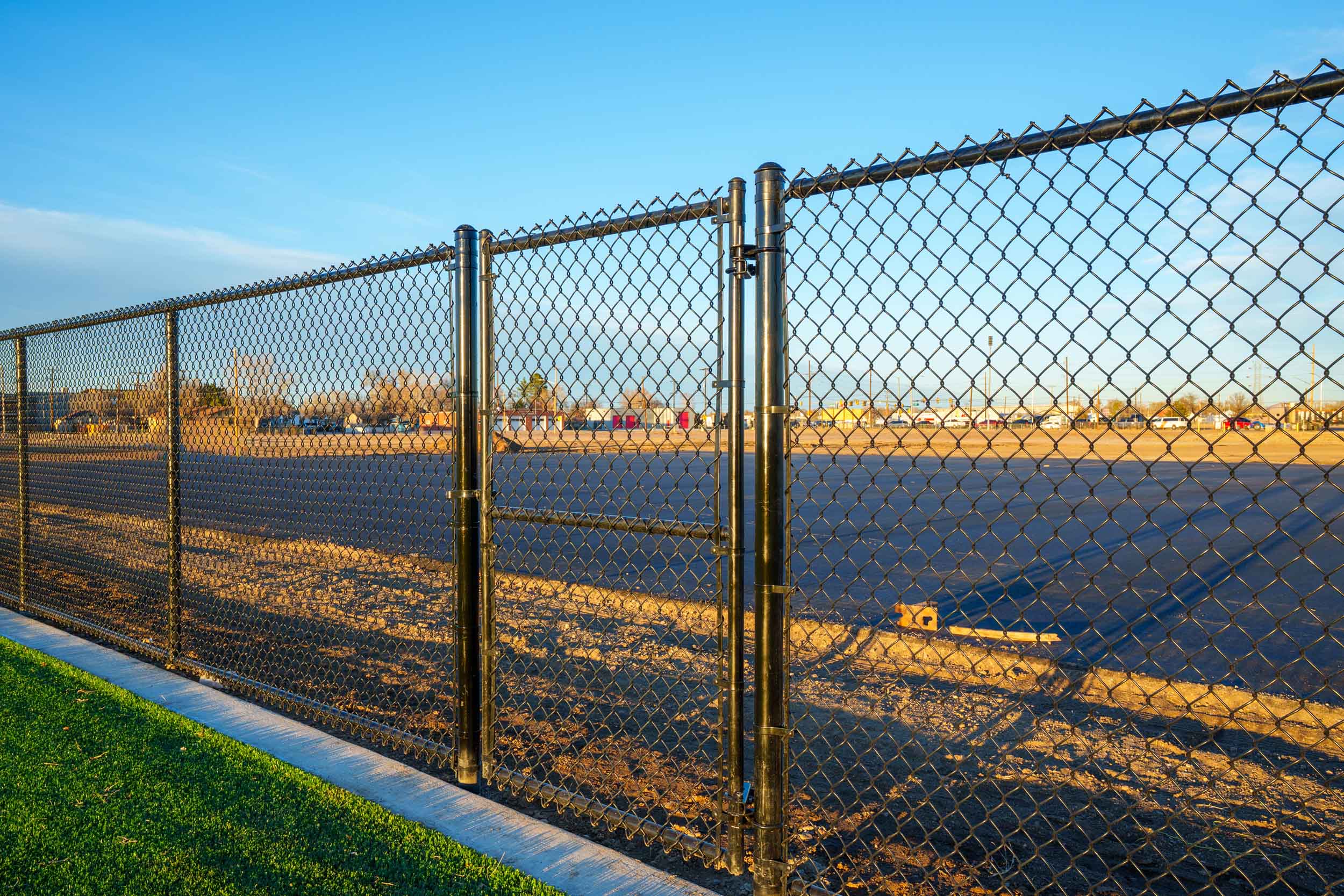
1. Commercial Chain-Link Systems
Heavy-gauge galvanizing or vinyl coating resists corrosion from winter snow accumulation and road salt. Optional privacy slats or windscreen fabric can reduce wind pass-through while blocking visibility into equipment storage yards or fleet parking areas.
2. Steel and Wrought Iron Security Fencing
High-tensile strength welded steel provides high perimeter security for corporate campuses, institutional properties, and public utilities. Reviewing the various types of ornamental fencing helps property owners choose clean architectural lines without sacrificing structural strength or impact resistance.
3. Anti-Climb and High-Security Barriers
Featuring close-mesh wire design, extended height configurations, or integrated security topping mounts, anti-climb fences limit foot footholds completely. These barriers serve as essential industrial safety fencing engineered specifically for high-security commercial centers, utility distribution hubs, and industrial yards.
4. Acoustic and Wood-Composite Perimeter Walls
Acoustic and composite perimeter walls reduce traffic, highway, and industrial equipment noise near property lines or mixed-use developments. Modern composite formulations handle high-altitude sun exposure and severe moisture far better than untreated commercial lumber.
Key Zoning Codes and Permitting Standards Across the Front Range
Navigating municipal building codes prevents costly site adjustments or project delays. Property owners must ensure designs comply with local guidelines before installation begins.
- Height Restrictions by Zone: Most commercial districts permit standard 6-foot or 8-foot perimeter barriers. Designated industrial zones may allow height extensions up to 10 feet outside front setback areas.
- Sight Triangles and Driveway Visibility: Intersections, property access points, and public driveway curb cuts strictly regulate fence height, often capping heights under 3 feet within designated clear-vision triangles to ensure traffic safety.
- Permitting Requirements: Fences exceeding specific height thresholds or featuring integrated electrical components require formal municipal site plan reviews and structural building permits prior to site excavation. Consult official resources like Denver commercial zoning and permit guidelines to verify local regulations.
Essential Steps for Installing Your Commercial Perimeter Fencing
- Conduct Precise Boundary Line and Site Surveys: Verify official property boundary markers with a licensed surveyor to avoid encroaching on adjacent commercial parcels.
- Contact Utility Locators: Call local locator services to ensure underground gas, electric, water, and communications lines are properly marked before digging post holes.
- Set Engineered Concrete Post Footings: Excavate footings past the regional 30-to-36-inch frost depth standard to hold firm against frost heave and intense wind leverage.
- Secure Access Gates and Hardware: Install heavy-duty commercial hinges, automated slide or swing gate operators, and reinforced latches designed for continuous daily operations.
- Establish Routine Property Inspections: Implement semi-annual checks to prevent issues like fence leaning, post instability, tension loss, or gate hardware tightness to preserve overall perimeter integrity.
Protect Your Commercial Investment with Marquez Fencing
Building a durable perimeter fence requires a contractor who understands local Front Range site conditions and municipal zoning standards. Marquez Fencing delivers full-service commercial fencing solutions tailored specifically to protect your assets year-round. Exploring service coverage for Front Range commercial properties ensures your installation project starts with experienced local guidance.